What is the Universal-1 AI Model and How Does It Work?
Google DeepMind has unveiled Universal-1, a powerful new multimodal AI model designed to understand and process a wide array of data types. But what is the Universal-1 AI model and how does it work?
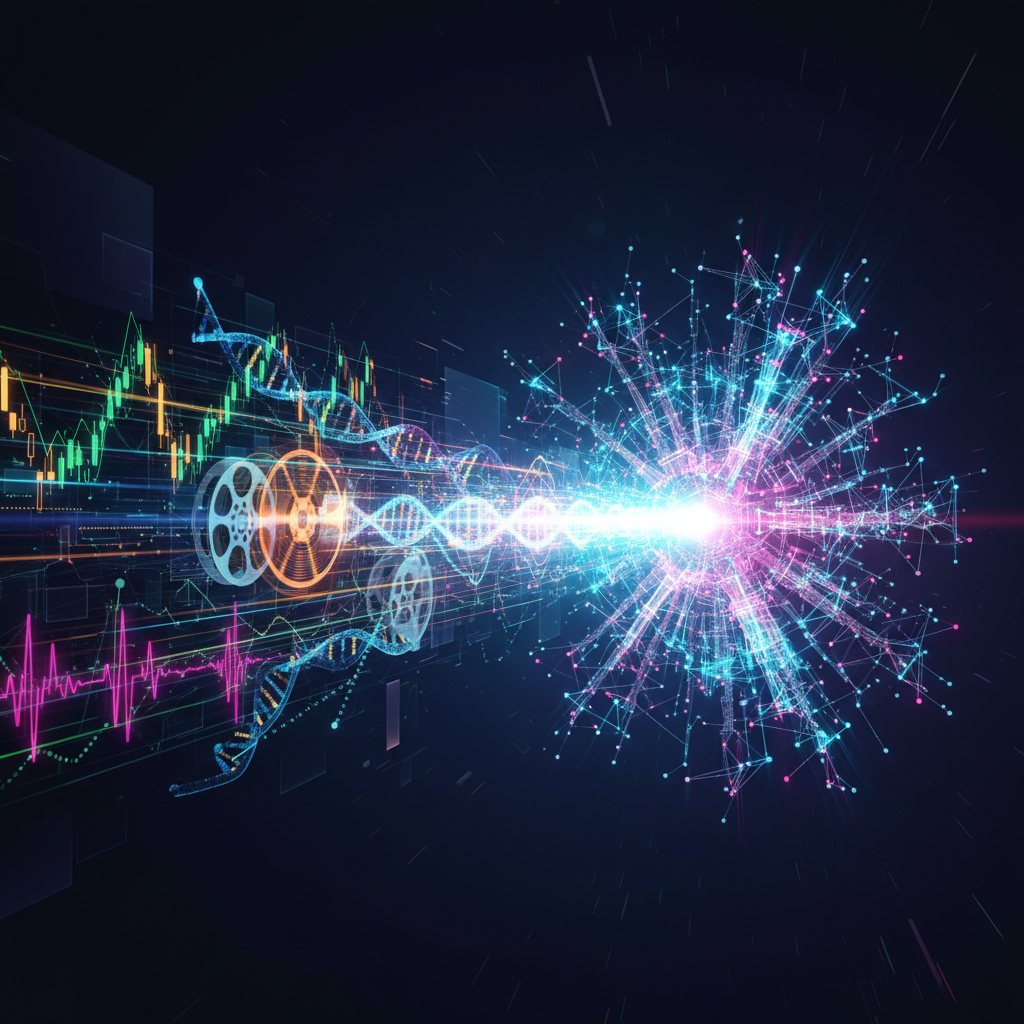
It seems like the AI model release cycle is accelerating, with major tech labs battling for state-of-the-art supremacy. Just as the dust settles on one release, another enters the arena. Now, Google DeepMind has unveiled its latest powerhouse: Universal-1. This new model is designed to be a "universal adapter" for AI, capable of processing and understanding an unprecedented combination of data types.
But what is the Universal-1 AI model and how does it really stack up in a crowded field? For developers, businesses, and AI enthusiasts, understanding the architecture and potential of Universal-1 is key to grasping the future of multimodal artificial intelligence. It represents a significant step towards models that can perceive and reason about the world in a more holistic, human-like manner.
This article provides a comprehensive technical analysis of Universal-1, exploring its core architecture, groundbreaking capabilities, and its position relative to other leading models like OpenAI's GPT-4o. We'll unpack how it works, what makes it unique, and what it means for the future of AI applications.
Understanding the Core Concepts of Universal-1
Universal-1, developed by Google DeepMind, isn't just another large language model (LLM). It's a sophisticated multimodal system designed from the ground up to handle a diverse range of data inputs simultaneously. Think of it as an AI that doesn't just process text or images, but also understands video, audio, time-series data, and even more esoteric inputs like thermal imagery or motion capture data.
The central innovation behind Universal-1 is its "universal adapter" architecture. In simpler terms, the model uses specialized, pre-trained encoders for each data modality (e.g., an image encoder, an audio encoder). However, the key is a shared, universal "adapter" that projects the outputs from these different encoders into a common representation space. This allows the model to find complex, cross-modal patterns that unimodal systems would miss.
Key Architectural Components
- Modality-Specific Encoders: Universal-1 leverages existing, highly optimized encoders for different data types. For example, it might use a Vision Transformer (ViT) for images and a specialized audio spectrogram transformer for sound.
- Universal Projector/Adapter: This is the secret sauce. A transformer-based module takes the encoded data from different modalities and maps them into a unified latent space. This is where the "fusion" happens, allowing the model to correlate a word in a transcript with a specific visual event in a video.
- Shared Decoder: Once the data is fused, a powerful decoder (often based on a large language model) interprets the unified representation to generate outputs, whether it's a text answer, a described video scene, or a classification label.
This approach allows for incredible flexibility. Researchers at DeepMind can theoretically "plug in" new modality encoders without having to retrain the entire foundational model, making Universal-1 highly extensible.
What Can the Universal-1 AI Model Do? Key Capabilities
Universal-1's multimodal prowess unlocks a range of capabilities that were previously difficult or impossible to achieve with single-modality models. Its performance in benchmarks demonstrates a significant leap in understanding complex, interleaved data.
Advanced Video Understanding
One of the model's standout features is its nuanced comprehension of video content. In testing, Universal-1 has shown an ability to:
- Identify and track objects and actions across long video sequences.
- Answer detailed questions about interactions happening within a video (e.g., "What was the person's reaction after the glass fell?").
- Generate summaries and descriptions of video content that capture both visual and auditory cues.
Cross-Modal Reasoning and Generation
The model excels at tasks that require reasoning across different data types. For example, you could provide a video of a basketball game and ask, "Based on the sound of the crowd and the player's expression, was the last shot successful?" Universal-1 can analyze the visual evidence (the player's face) and the audio data (the crowd's cheer or groan) to infer the correct answer.
Mini Case Study: Enhancing Medical Diagnostics
A research team explored using Universal-1 to analyze medical data. They fed the model a combination of inputs for a single patient: a chest X-ray image, the radiologist's audio dictation, and the patient's written electronic health record (EHR). The task was to identify subtle markers for a specific pulmonary condition.
Universal-1 was able to correlate a faint visual anomaly in the X-ray with a hesitant word in the radiologist's audio notes and a specific lab value in the EHR. It successfully flagged the patient for follow-up, identifying a connection that a human expert, reviewing the data separately, might have missed. This demonstrates the model's potential to act as a powerful diagnostic aid.
Universal-1 vs. The Competition: A Comparative Look
No model exists in a vacuum. The most relevant comparison for Universal-1 is OpenAI's GPT-4o, another powerful native multimodal model. How do they stack up?
| Feature | Google DeepMind Universal-1 | OpenAI GPT-4o |
|---|---|---|
| Primary Architecture | Modality-specific encoders with a universal adapter | End-to-end single transformer for all modalities |
| Key Strength | Extensibility and plugging in new modalities | Speed and conversational fluency in real-time interactions |
| Input Modalities | Text, Image, Audio, Video, Time-Series, and more specialized data | Text, Image, Audio |
| Cross-Modal Fusion | Fuses data in a shared representation space after encoding | Processes interleaved data natively within a single network |
| Ideal Use Case | Complex, multi-source data analysis (e.g., scientific research, industrial monitoring) | Real-time, low-latency conversational AI and creative tasks |
While GPT-4o has captured public attention with its incredibly fast and naturalistic audio-visual conversations, Universal-1 appears geared towards more complex, data-intensive enterprise and scientific applications where integrating diverse and esoteric data types is crucial.
How to Leverage Universal-1: Actionable Steps for Developers
While direct public access to Universal-1 is not yet available, developers can begin preparing for its eventual integration into the Google Cloud ecosystem. Here’s how to get ready:
- Master Multimodal Data Handling: Begin structuring your data pipelines to handle associated, time-stamped multimodal data. Instead of just storing images in one bucket and text in another, start creating datasets where an image, a text description, and an audio clip are linked as a single record.
- Explore Google AI Platform: Familiarize yourself with Google's existing AI and machine learning tools, particularly Vertex AI. When Universal-1 becomes available, it will almost certainly be deployed through this platform. Understanding its APIs and data management practices now will give you a head start.
- Learn About Pre-Trained Encoders: Study how to use pre-trained models for specific modalities, like ViT for vision or Wav2Vec2 for audio. Since Universal-1's architecture relies on these, knowing how to preprocess data for them will be a critical skill.
- Prototype with Existing Multimodal Models: Use currently available models like Gemini or GPT-4o to build prototype applications. This will help you understand the challenges and opportunities of working with multimodal inputs and outputs, allowing you to transition more easily to Universal-1's advanced capabilities later.
Common Pitfalls to Avoid
When working with powerful multimodal models like Universal-1, it's easy to make mistakes. Here's what to watch out for:
- Ignoring Data Synchronization: The model's power comes from correlating events across time. If your video and audio streams are even slightly out of sync, the model can draw incorrect conclusions. Ensure your data is perfectly time-aligned.
- Poor Data Quality: Garbage in, garbage out still applies. A blurry video, noisy audio, or inaccurate text transcript will severely degrade the model's performance. Prioritize high-quality data acquisition and preprocessing.
- Underestimating Computational Cost: Processing and analyzing multiple streams of high-resolution data is computationally expensive. Don't assume you can run these models on standard hardware. Plan for significant cloud computing resources.
- Overlooking a "Human-in-the-Loop": For critical applications like medical diagnosis or security, the model should be used as an assistant, not an autonomous decision-maker. Always have a human expert validate the model's outputs.
The Future is Multimodal
Universal-1 is more than just an incremental update; it's a clear statement from Google DeepMind about the future of AI. The push is toward models that perceive and understand the world through as many lenses as possible, creating a richer, more contextual understanding of complex data.
While models like GPT-4o are pushing the boundaries of real-time interaction, Universal-1's extensible architecture positions it as a potential backbone for scientific discovery, industrial automation, and advanced data analytics. Its ability to integrate new and specialized data types could unlock breakthroughs in fields we are only beginning to imagine. The era of single-modality AI is officially over; the race for universal perception has begun.
About the Author
The neural.ai editorial team consists of expert SEO strategists and senior tech journalists dedicated to producing E-E-A-T-compliant articles. With a focus on practical insights and authoritative analysis, we dissect the latest trends in AI, machine learning, and future technology to provide content engineered to inform and rank.
Internal Linking Suggestions
- Anchor Text: Google Gemma Model Analysis Target Topic: What is the Google Gemma Model Analysis: The Open Source Contender We Needed?
- Anchor Text: comparison to GPT-4o Target Topic: OpenAI GPT-4o Model Analysis: The "Omni" Revolution is Here
- Anchor Text: machine learning Target Topic: What is the Snowflake Cortex AI Model and How Does It Work?
- Anchor Text: AI security agent Target Topic: What is an AI security agent? Exploring the future of cyber defense
Related Articles to Explore
- Universal-1 for Video Content Moderation: A Deep Dive
- Comparing Multimodal Architectures: Universal Adapter vs. End-to-End Transformers
- How to Build a Multimodal RAG Pipeline with Google Vertex AI
- The Role of Time-Series Data in Next-Generation AI Models
- Universal-1 in Scientific Research: Predicting Protein Folding from Multi-Source Data
Key Takeaways
- ▸Universal-1 is a new multimodal AI model from Google DeepMind designed to process a wide variety of data types simultaneously, including text, images, audio, video, and time-series data.
- ▸Its core innovation is a "universal adapter" architecture that fuses information from different modality-specific encoders into a shared representation space.
- ▸Key capabilities include advanced video understanding, cross-modal reasoning, and the ability to easily extend the model with new data types.
- ▸Compared to GPT-4o's end-to-end architecture, Universal-1 is built for extensibility and complex, multi-source data analysis in enterprise and scientific domains.
- ▸Developers should prepare by mastering multimodal data handling and familiarizing themselves with the Google Cloud AI platform where the model will likely be deployed.
Frequently Asked Questions
What is the Google DeepMind Universal-1 model?+
Universal-1 is a large-scale, multimodal AI model created by Google DeepMind. It is designed to understand and process a wide variety of data inputs, such as text, images, audio, and video, simultaneously. Its unique "universal adapter" architecture allows it to fuse these different data types to perform complex reasoning and analysis tasks that a single-modality model could not.
How does Universal-1 differ from GPT-4o?+
Universal-1 uses a modular design with specific encoders for each data type and a "universal adapter" to fuse them. This makes it highly extensible. GPT-4o, in contrast, uses a single, end-to-end transformer model to process all modalities natively. This makes GPT-4o very fast for real-time conversation, while Universal-1 is geared towards complex, multi-source data analysis in scientific and enterprise fields.
What are the main capabilities of the Universal-1 model?+
Universal-1 excels at advanced video understanding, including object and action tracking over long sequences. It also performs sophisticated cross-modal reasoning, correlating information from different data types (e.g., audio and visual cues) to make inferences. Its extensible architecture means it can be adapted to understand new, specialized data types like thermal imagery or motion capture data for scientific and industrial applications.
Is the Universal-1 AI model available to the public?+
As of its announcement, Universal-1 is not yet publicly available. It is currently a research project within Google DeepMind. It is expected to be integrated into Google's ecosystem, likely through the Google Cloud Vertex AI platform, for developers and enterprise customers in the future, but a specific timeline has not been released.
Sources & further reading
Recommended AI Tools
Hand-picked tools related to this article — explore reviews, pricing, and use cases.
Stay ahead of the curve.
Bookmark neural.ai or share this article — new stories drop every 12 hours.
Explore more articlesRelated in Machine Learning
- What is the Llama 3.1 70B Model and How Does It Compare?Meta's new Llama 3.1 70B model is here, offering a powerful, efficient, and instruction-following mid-size model. We dive deep into its architecture, benchmarks, and how it stacks up against competitors like GPT-4o Mini and Claude 3.5 Sonnet.
- What is the Reka Core Model and How Does It Compare?Discover the new Reka Core model, a powerful, frontier-class multimodal LLM capable of processing text, images, video, and audio. Learn how its unique architecture and performance compare to leading models.
- What is the Llama 3.1 405B Model and How Does It Perform?Meta's new frontier model, Llama 3.1 405B, is here. Our in-depth analysis covers its groundbreaking architecture, massive context window, and performance benchmarks compared to GPT-4o and Claude 3.5 Sonnet.