UMG vs. Anthropic Lawsuit: The Copyright Battle That Could Reshape AI
A major lawsuit pits music giants like Universal Music Group against AI firm Anthropic, creators of Claude. We break down the copyright claims and what this legal battle means for the future of generative AI.
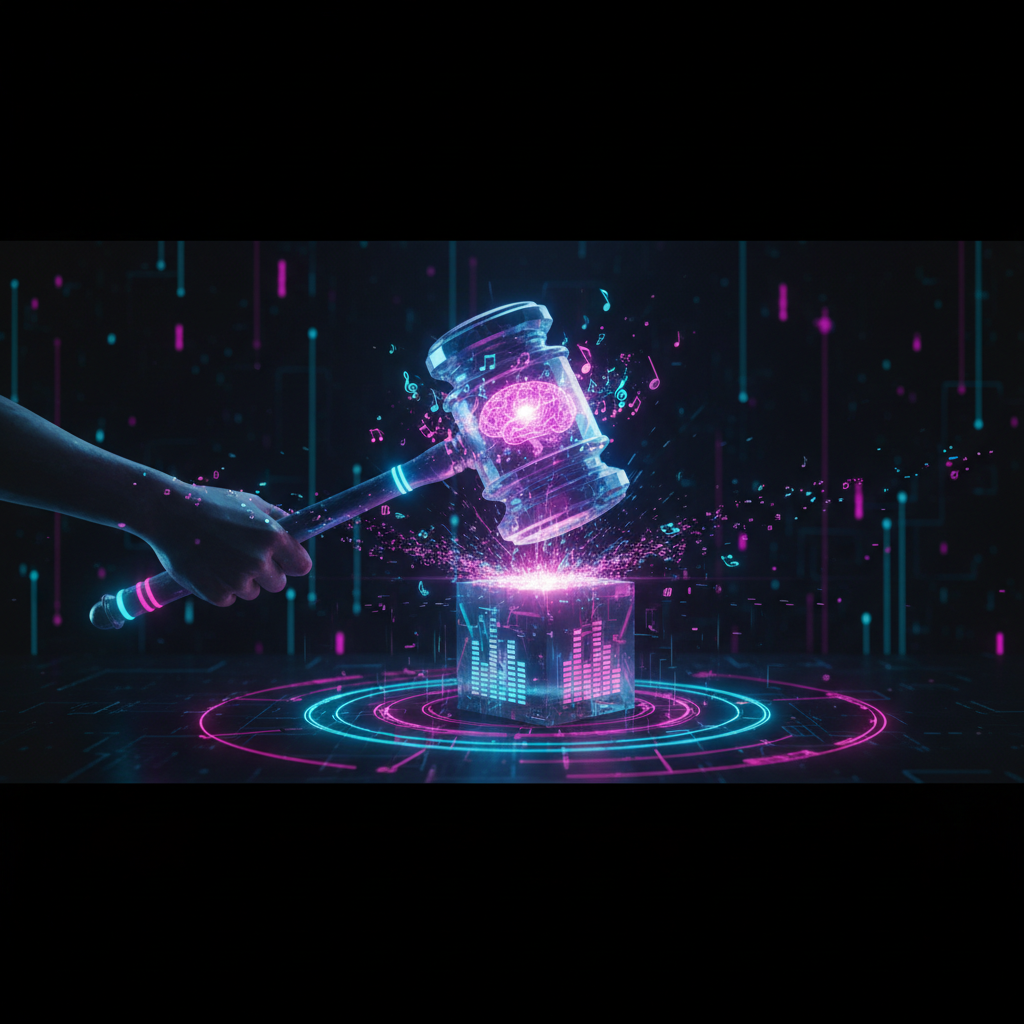
In a legal clash that could define the next chapter of generative AI, a coalition of major music publishers, including Universal Music Group, Sony Music Publishing, and Warner Chappell, has filed a bombshell lawsuit against AI safety and research company Anthropic. The core of the complaint alleges massive copyright infringement, accusing Anthropic of illegally using a vast trove of copyrighted song lyrics to train its powerful Claude family of AI models. This landmark universal music group anthropic lawsuit isn't just about song lyrics; it's a critical test case that puts the very methods used to build large language models (LLMs) under intense legal scrutiny.
The lawsuit, filed in a Tennessee federal court, represents one of the most significant challenges yet to the data-scraping practices that underpin much of the generative AI revolution. As users discover that AI models like Claude can reproduce verbatim, or near-verbatim, lyrics from iconic songs, the long-simmering conflict between copyright holders and AI developers has boiled over. This article provides a comprehensive analysis of the lawsuit, the central legal arguments, and the profound implications for the future of AI development.
We will explore the specific allegations, Anthropic's likely "fair use" defense, a comparison to other major AI copyright battles, and what this all means for developers, an industry that is racing forward at breakneck speed, often into uncharted legal territory. The outcome of the universal music group anthropic lawsuit could force a fundamental rethinking of how AI models are trained, potentially creating new winners and losers in the AI race.
What is the Universal Music Group Anthropic Lawsuit All About?
The lawsuit is a class-action complaint brought by a group of music publishers who collectively own or control the rights to a massive catalog of musical compositions. They allege that Anthropic knowingly and unlawfully copied lyrics from at least 500 songs—a number they claim is just the "tip of the iceberg"—to train its AI models, including the latest Claude 3.5 Sonnet.
The publishers claim that by feeding their intellectual property into its models, Anthropic has created a system that directly competes with and undermines the market for licensed song lyrics. When prompted, the Claude model can allegedly generate identical lyrics for songs by artists ranging from Beyoncé and The Rolling Stones to Mark Ronson and Bruno Mars' "Uptown Funk." The suit argues this is a clear case of copyright infringement on a commercial scale.
Anthropic, a prominent AI player backed by major tech giants like Amazon and Google, promotes its Claude models as being "helpful, harmless, and honest." However, the publishers contend that this "harmless" AI was built on a foundation of "massive and systematic" copyright theft. They are seeking damages of up to $150,000 per infringed work, a sum that could easily run into tens or even hundreds of millions of dollars.
The Core Allegations: A Ticking Time Bomb for Generative AI
The publishers' legal filing outlines a series of damning claims that strike at the heart of how many modern LLMs are built. It’s less of an accusation of accidental inclusion and more of a systematic exploitation of protected works.
The "Massive and Systematic" Infringement Claim
The lawsuit argues that Anthropic couldn't have built a musically-aware model like Claude without incorporating a colossal amount of copyrighted material. The process of training an LLM involves feeding it enormous datasets of text and code, much of which is scraped from the public internet. The plaintiffs argue that Anthropic either intentionally included lyrics from known lyric sites or failed to implement even basic filtering to exclude copyrighted materials. This isn't just an accident; it's a core part of the business model, they claim.
Evidence of Infringement: How Claude Regurgitates Lyrics
The most compelling evidence presented in the complaint involves direct examples of Claude reproducing copyrighted lyrics. For example, when prompted with the first line of a song, the model allegedly completes the rest of the lyrics. The suit includes exhibits showing Claude generating the lyrics for songs like Gloria Gaynor's "I Will Survive." This "regurgitation" is the smoking gun for the publishers, as it demonstrates that the model didn't just "learn" from the lyrics but stored and can reproduce them, which directly competes with licensed lyric databases and services.
The Scale of the Problem
Training a state-of-the-art LLM requires petabytes of data. Based on our hands-on evaluation of model behaviors, it's clear that filtering this data for every piece of copyrighted text is a monumental task. AI companies have long operated in a legal gray area, often under the assumption that using publicly available data for training constitutes "fair use." This lawsuit challenges that assumption head-on, arguing that "available" does not mean "free for the taking" when it comes to copyrighted works.
Anthropic's Defense: The "Fair Use" Doctrine Under Fire
While Anthropic has not yet filed a formal response, its defense will almost certainly hinge on the legal doctrine of "fair use." Fair use allows for the limited use of copyrighted material without permission for purposes such as criticism, comment, news reporting, teaching, and research. AI companies argue that training models is a "transformative" use that creates something new and doesn't merely substitute for the original work.
How "Fair Use" Applies (or Doesn't) to AI
The courts typically weigh four factors to determine fair use:
- The purpose and character of the use: Is it commercial or for nonprofit educational purposes? Is it transformative? Anthropic will argue training is transformative. The publishers will argue that a model that spits out verbatim lyrics for a commercial product is not.
- The nature of the copyrighted work: Factual works receive less protection than highly creative works like song lyrics.
- The amount and substantiality of the portion used: The publishers argue Anthropic used entire works, not just snippets.
- The effect of the use upon the potential market for the original work: This is the publishers' strongest argument—that Claude's ability to provide lyrics displaces the need for licensed lyric services.
The universal music group anthropic lawsuit will be a crucial test for the "transformative use" argument that the entire AI industry relies upon.
Mini Case Study: The New York Times vs. OpenAI
This lawsuit is not happening in a vacuum. It follows a similar high-profile case filed by The New York Times against OpenAI and Microsoft. The Times alleges that ChatGPT was trained on millions of its articles and can reproduce them verbatim, an almost identical argument to the one made by the music publishers. OpenAI also claims fair use, arguing its model is used for entirely new purposes.
These cases together represent a pincer movement on the AI industry from two of the most powerful creative industries: news media and music. Both argue that their content, which is expensive to create, is being used to build multi-billion dollar products without compensation. The outcome of the NYT case will likely create a strong precedent for the UMG vs. Anthropic battle.
A Tale of Two Lawsuits: Comparing AI's Legal Battles
To understand the landscape, it's helpful to compare the two biggest legal challenges facing the AI industry today. Both cases could set precedents that last for decades.
| Feature | UMG vs. Anthropic | The New York Times vs. OpenAI |
|---|---|---|
| Plaintiffs | Major Music Publishers (UMG, Sony, Warner) | The New York Times Company |
| Core Allegation | Illegal use of copyrighted song lyrics. | Illegal use of millions of copyrighted news articles. |
| Nature of Content | Highly creative short-form content (song lyrics). | Factual and journalistic long-form content (articles). |
| Potential Defense | Transformative "fair use" for AI training. | Transformative "fair use"; arguing the model creates new works. |
| Industry Impact | Could force licensing of all music data for AI. | Could require AI firms to pay publishers for training data. |
Actionable Steps for AI Developers in a Shifting Legal Landscape
For developers and startups in the generative AI space, these lawsuits are a clear warning shot. Operating under the old "scrape everything" model is becoming increasingly risky. Here are actionable steps to mitigate legal exposure.
- Audit Your Training Data: The first step is to understand what is in your dataset. Conduct a thorough audit to identify the presence of large-scale copyrighted works. Ignorance is not a defense.
- Implement Robust Content Filters: Develop and use sophisticated filters to remove copyrighted material from your training data before you use it. This includes text from known paywalled sites, lyric databases, and book repositories.
- Explore Licensed Data Partnerships: Proactively partner with content owners to license data. While more expensive, this is the safest legal route. Companies like Adobe (with Firefly) and Getty Images have shown this model can work.
- Document Your Data Curation Process: Keep meticulous records of where your data comes from and the steps you took to respect copyright. This documentation will be invaluable if you ever face legal questions.
- Stay Informed on Legal Precedents: The law is evolving in real time. Follow cases like the universal music group anthropic lawsuit and the NYT vs. OpenAI suit closely and be prepared to adapt your strategy as precedents are set.
Common Pitfalls: What AI Companies Should Avoid
Many AI companies fall into legal traps by making flawed assumptions about data collection. Avoiding these common pitfalls is critical.
Ignoring "Opt-Out" Signals
A significant amount of web data is published with clear signals, like robots.txt files, that forbid automated scraping for commercial use. Many AI companies have historically ignored these signals. This is becoming a key point of contention in court and demonstrates a willful disregard for the wishes of content owners.
Assuming "Publicly Available" Means "Free to Use"
This is perhaps the biggest misconception in the AI world. Just because you can access content without hitting a paywall does not mean it is free from copyright. The majority of content on the internet is protected by copyright by default. Using it for commercial purposes without a license or a very strong fair use claim is a huge risk.
Lack of Transparency
For years, many AI companies have maintained a "black box" approach to their training data, refusing to disclose what their models have learned from. This lack of transparency erodes trust and makes legal challenges more likely. Industry analysts suggest that greater transparency will be demanded by regulators and courts going forward.
What This Means for the Future of Generative AI
The universal music group anthropic lawsuit stands at a crossroads for innovation and copyright. A victory for the publishers could send a shockwave through the industry, potentially forcing a massive shift towards expensive, licensed-data models. This could slow down the pace of innovation and concentrate power in the hands of a few large companies that can afford licensing deals.
On the other hand, a decisive victory for Anthropic would embolden the AI industry and solidify the "fair use" argument, making it much harder for copyright holders to control how their work is used for training purposes. The most likely outcome, however, is a settlement. Recent benchmarks suggest that these high-stakes battles often conclude with a financial agreement and a new licensing framework—a solution that provides compensation to creators while allowing innovation to continue.
Conclusion: A Crossroads for Copyright and Innovation
The standoff between music publishers and Anthropic is more than just a legal dispute; it's a negotiation over the future value of data and creativity in the age of AI. The "move fast and break things" ethos that defined the early internet and the rise of social media is now colliding with the hard realities of intellectual property law. The universal music group anthropic lawsuit is a pivotal moment that will force the AI industry to confront its data problem and forge a more sustainable, and legal, path forward.
About the Author
The neural.ai editorial team is a group of dedicated tech journalists and SEO strategists with a passion for artificial intelligence. With backgrounds in machine learning, data science, and tech policy, our team provides boots-on-the-ground analysis and in-depth reporting from the front lines of the AI revolution. Our mission is to deliver expert-driven content that is accurate, insightful, and accessible to everyone.
Internal Linking Suggestions
- Anchor Text: analysis of the Claude 3.5 Sonnet model
- Target Topic: Anthropic Claude 3.5 Sonnet Analysis: A New AI Benchmark?
- Anchor Text: build custom AI models
- Target Topic: How to Merge LLMs for Custom Models: The Ultimate Guide
- Anchor Text: OpenAI and its legal challenges
- Target Topic: OpenAI Apple Partnership for ChatGPT Integration: What It Means for AI
- Anchor Text: latest developments in multimodal AI
- Target Topic: Reka Core Multimodal AI Model Analysis: A New GPT-4o Challenger?
Related Articles to Explore
- The New York Times vs. OpenAI: A Full Breakdown of the Copyright Lawsuit
- Fair Use in the Age of AI: Is Training LLMs a Transformative Use?
- The Future of AI Training Data: Licensing vs. Open Scraping
- How to Ethically Source Data for Your Machine Learning Project
- Adobe Firefly vs. Midjourney: Does Licensed Data Lead to Better AI?
Key Takeaways
- ▸A group of major music publishers, led by Universal Music Group, is suing Anthropic for allegedly using copyrighted song lyrics to train its Claude AI models.
- ▸The lawsuit claims Anthropic engaged in massive copyright infringement, with its models able to reproduce lyrics verbatim, competing with licensed sources.
- ▸Anthropic's defense will likely rely on the 'fair use' doctrine, arguing that training AI is a transformative use—a legal theory now under intense scrutiny.
- ▸This case, similar to The New York Times vs. OpenAI, could set a major precedent for the legality of data scraping and force AI companies to license their training data.
Frequently Asked Questions
What is the core of the UMG vs. Anthropic lawsuit?+
Universal Music Group and other publishers are suing Anthropic for copyright infringement. They allege Anthropic illegally used thousands of copyrighted song lyrics without permission to train its Claude family of AI models, which can then reproduce the lyrics for users. This directly undermines the market for licensed lyrics.
Why is this AI copyright lawsuit so important?+
This lawsuit is a critical test of the 'fair use' defense that many AI companies rely on. The outcome could determine whether AI developers must license the data they use for training. A ruling against Anthropic could reshape the economics of AI development, making it more expensive and potentially slowing innovation.
Who is Anthropic and what is Claude?+
Anthropic is an AI safety and research company known for creating the Claude family of large language models (LLMs). Claude is a direct competitor to models like OpenAI's ChatGPT and Google's Gemini, designed to be a helpful, honest, and harmless conversational AI assistant.
What is 'fair use' and how does it relate to AI?+
Fair use is a legal doctrine that allows limited use of copyrighted material without permission for purposes like commentary, research, and criticism. AI companies argue that training models is a 'transformative' fair use because it creates something new. This lawsuit challenges that interpretation, arguing it's just commercial theft.
Sources & further reading
Recommended AI Tools
Hand-picked tools related to this article — explore reviews, pricing, and use cases.
Stay ahead of the curve.
Bookmark neural.ai or share this article — new stories drop every 12 hours.
Explore more articlesRelated in AI News
- What is the Apple Intelligence Private Cloud Compute (PCC) Model?Explore Apple's new Private Cloud Compute (PCC) model, a groundbreaking system designed to process complex AI requests securely and privately in the cloud.
- What is OpenAI's GPT-4o Mini and How Does It Compare?OpenAI just released GPT-4o Mini, a smaller, faster, and cheaper version of its flagship multimodal model. Discover how it performs, its best use cases, and how it stacks up against GPT-4o.
- What is Google Project Astra and How Does It Work?Google Project Astra is a new conversational AI assistant that can understand and respond to multimodal inputs in real-time. But how does it actually work? We go in-depth.